Garage Door Sensor Repair and Alignment in Los Angeles
Functional safety sensors are necessary for any automatic garage door. If the door fails to close, backs up unexpectedly, or displays a blinking sensor light, the problem may be basic garage door sensor alignment rather than a failed opener. However, sensor issues can also involve wiring, brackets, corrosion, or a damaged garage door opener.
This guide shows how garage door safety sensors work, how to inspect and align them safely, and when professional garage door repair is the better choice. It also covers Los Angeles service considerations, including sunlight interference, coastal moisture, older homes, and common garage door repair pricing factors.
How Garage Door Safety Sensors Work
Most modern overhead garage door systems use a pair of garage door safety sensors, also called photo-eye sensors. They are installed near the bottom of the garage door tracks, usually facing each other across the opening. One sensor sends an invisible infrared beam while the other picks up it.
When the beam remains uninterrupted, the garage door opener permits the door to close. If a person, pet, bicycle, vehicle, box, or other sensor obstruction crosses the beam, the opener should stop or reverse the door. This auto-reverse feature is a key part of garage door safety.
One photo-eye sensor commonly shows an amber indicator light, while the receiving sensor displays a green indicator light. The exact colors can vary by garage door opener brand, but a steady light generally indicates that the sensor has power and is communicating correctly. A blinking sensor light often suggests misalignment, an obstruction, a loose electrical connection, or damaged sensor wiring.
Because the sensors communicate with the garage door opener, a fault can prevent an otherwise healthy overhead garage door from closing. Do not bypass or disconnect the sensors to force operation. Doing so removes an important safety protection and may create a serious injury or property-damage risk.
Signs Your Automatic Door Sensors Need Repair
The most noticeable symptom is that the door opens as usual but will not close using the wall button or remote. It may travel down a few inches and then reverse, or the door reverses at once after you press the control. In some cases, the opener light flashes or the motor runs without moving the door.
- Flashing sensor lights: A blinking sensor light can indicate that the photo eyes are not aligned or that one sensor is not receiving power.
- The door reverses: If the door reverses before reaching the floor, inspect the sensors, tracks, and possible obstructions.
- Visible sensor movement: Loose sensor brackets can shift after contact with a stored item, lawn tool, vehicle, or garage equipment.
- Damaged sensor wiring: Frayed, pinched, chewed, or corroded sensor wiring can interrupt the signal between the sensors and the opener.
- Intermittent operation: A door that works at some times but not others may have sunlight interference, vibration-related alignment problems, or an aging connection.
Before scheduling garage door repair, check whether anything is blocking the beam. Also inspect the bottom sections of the garage door and the garage door tracks for damage or debris. A bent track or door panel can create symptoms that look like a sensor failure.
How to Properly Align Garage Door Sensors Safely
Routine garage door sensor alignment is often manageable for a cautious homeowner, as long as the issue is confined to the sensors. The sensor brackets should be securely fastened, level with one another, and aimed directly across the garage opening. The beam should run in line with the floor and remain free from the garage door tracks.
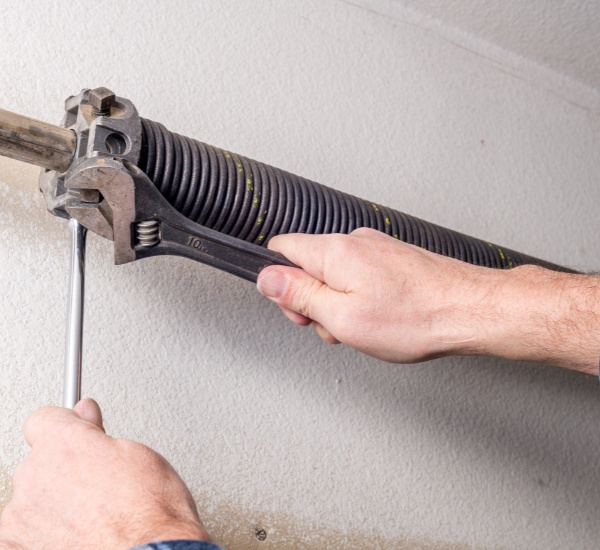
Do not adjust torsion springs, extension springs, lift cables, drums, or other high-pressure components during this process. A garage door can be substantial even when disconnected from the opener, and a spring failure can release considerable force. If the door is crooked, unusually heavy, or off its tracks, pause and reach out to a licensed garage door technician.
Step 1: Remove Power and Check Both Sensors
Start by closing the door if it can close securely. Unplug the garage door opener power from its electrical outlet. If the opener cannot be unplugged easily, use the appropriate circuit breaker only if you can identify it safely. Avoid working around exposed electrical wiring.
Inspect both sensors, their sensor brackets, and the wiring that runs toward the garage door opener. Look for unstable wiring, damaged insulation, crushed cable, corrosion, or a wire pulled out of its terminal. A loose electrical connection can cause one sensor to lose power even when the sensor itself is functioning.
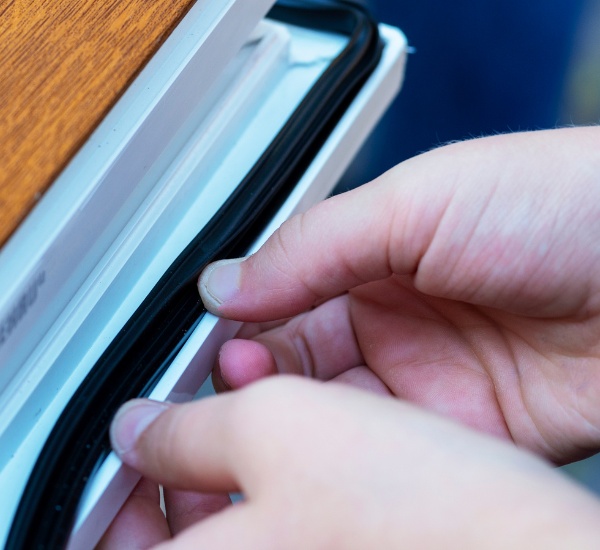
Examine each sensor lens for dust, cobwebs, grease, or impact damage. Also check whether a bracket has twisted or moved away from the track. Do not place your hands beneath a partially open door, and do not pull the manual release cord unless you understand how to secure and use the door safely.
Step 2: Wipe and Reposition the Photo Eyes
Wipe each photo-eye lens with a clean, dry microfiber cloth. Avoid abrasive cleaners and do not spray liquid directly onto the sensor. Confirm that both sensors are mounted at approximately the same height and face one another without obstruction.
Loosen the mounting screws slightly if the sensor brackets need adjustment. Move one sensor gradually until it points directly at the other, then tighten the screws without making them too tight. Excessive force can bend a bracket or damage the sensor housing.
Reestablish power and observe the indicator lights. A steady green indicator light on the receiving sensor and a steady amber indicator light on the sending sensor typically show proper communication. If either light remains off or continues blinking, examine the wiring and bracket stability. Some openers use different light colors, so consult the manufacturer’s instructions if available.
Bright, low-angle sunlight common in west- and south-facing Los Angeles garages can affect photo-eye sensors, especially during morning or late-afternoon hours. If the lights change when the sun moves, cover the sensor without blocking its beam, or ask a professional about a compatible repositioning solution.
Step 3: Check the Door’s Auto-Reverse Function
After alignment, perform an auto-reverse test. Place a flat cardboard box in the center of the garage door opening where the door would meet the floor. Use the wall control to close the door while standing clear of its path. The door should contact the box and reverse rather than crushing it.
EM Garage Doors And Gate Service Inc19629 Cantara St, Reseda, CA 91335
(818) 919-0785
https://emgaragedoorsandgateservice.com/
https://maps.app.goo.gl/XujLWxA4pAQKARQT8
34.2193569, -118.5613022
Then test the photo-eye response by briefly interrupting the beam while the door is closing, without placing your hands, feet, or body under the door. The door should stop or reverse. If it does not, discontinue use and arrange professional garage door repair.
Never treat a successful light alignment as proof that every part of the system is safe. The auto-reverse test is an https://bestoftorsionspringrepair1-101-101-10.hexaforgey.com/posts/what-should-you-learn-about-garage-door-repair-in-los-angeles important part of garage door safety, but springs, cables, rollers, tracks, and the door itself also need periodic garage door maintenance.
Common Causes of Garage Door Sensor Problems
Misaligned sensors are only one possible cause of a problem with closing. Assessing the surrounding conditions can help determine whether a simple adjustment is appropriate.
- Sun exposure interference: Direct sunlight can affect the receiving photo eye. This is especially relevant in Los Angeles when low-angle morning or late-afternoon light enters a west-facing or south-facing garage.
- Faulty wiring: A damaged sensor wire may result from fasteners, storage equipment, rodents, vibration, or accidental impact. Do not splice wires casually unless the repair complies with the opener manufacturer’s requirements.
- Bent sensor bracket: A bracket that is bent by a broom, bicycle, vehicle, or moving box may hold the sensor at an angle that cannot be corrected by simple repositioning.
- Pest damage: Rodents and insects can harm insulation or form nesting areas around wiring and opener components.
- Coastal corrosion: Coastal moisture and salty air in Santa Monica, Venice, and Long Beach can lead to corrosion on sensor connections, brackets, fasteners, and other garage door hardware.
- Opener vibration: An opener that vibrates excessively can gradually move a loosely secured sensor bracket out of alignment.
- Track and door movement: Damaged garage door tracks, worn rollers, or a bent garage door panel can cause the door to catch and reverse even when the sensors are aligned.
Los Angeles County has a broad combination of older homes and detached garages. In these properties, older wiring, nonstandard mounting surfaces, previous repairs, and compatibility with a replacement opener may affect the correct repair decision.
Where Sensor Alignment Is Not Enough
If cleaning and alignment do not bring back regular function, the issue may involve the sensor electronics, sensor wiring, control board, or garage door opener. A garage door opener replacement may be advisable when the unit is outdated, repeatedly fails, lacks compatible safety technology, or has suffered electrical damage.
Do not assume every reversing problem is a sensor problem. A damaged garage door panel may rub against the tracks or make the door too heavy for the opener. A broken garage door spring can prevent balanced movement and place dangerous stress on the opener. Spring replacement should be performed by a professional because springs are under high tension.
Stop using the system if the door is uneven, falls rapidly, makes loud popping sounds, has a separated cable, or appears off its tracks. These conditions require more than garage door sensor alignment. A licensed technician can inspect the door balance, cables, rollers, springs, panels, tracks, and opener as a complete system.
Garage door fixes Costs in Los Angeles
The garage door repair cost in Los Angeles varies according to the cause of the failure, the door and opener brand, access to the wiring, urgency, and whether replacement parts are needed. A simple cleaning and alignment is generally less expensive than sensor replacement, wiring repair, opener work, spring service, or panel replacement.
Garage door repair pricing may also differ between neighborhoods and service companies. A service call to a detached garage in central Los Angeles may involve different access conditions than a repair in Pasadena, Glendale, Burbank, Long Beach, or the San Fernando Valley. Evening, weekend, and emergency garage door repair appointments may carry higher costs.
Ask for a written repair estimate before authorizing work. The estimate should identify the failed component, labor, parts, diagnostic fees, disposal charges, and any warranty. Be cautious of a recommendation to replace the entire door when the issue is only a loose bracket or damaged sensor wire.
Sensor Repair, Opener, Spring, and Panel Cost Factors
Sensor repair costs are influenced by whether the technician can realign the existing units or must replace one or both sensors. A wiring repair may require tracing the cable through finished walls or ceilings, which can increase labor. The garage door opener installation cost depends on opener horsepower, rail configuration, ceiling height, smart-home features, and whether new wiring or brackets are required.
Searches for “garage door spring replacement near me” often reflect an urgent problem, but spring work should never be selected solely by the lowest quoted price. The garage door spring cost depends on the spring type, door weight, cycle rating, accessibility, and whether related hardware is worn.
A garage door panel replacement may be possible if the manufacturer still supplies a matching section. Color, insulation, window design, and model availability affect the price. If several sections are damaged or the door is obsolete, replacement may be more cost-effective.
Residents comparing the 2 car garage door replacement cost or two car garage door replacement cost should request a detailed quote including the door, tracks, springs, opener compatibility, labor, removal, permits if applicable, and installation. A two-car door is not always priced simply by doubling the cost of a single door because construction, reinforcement, and hardware vary.
Choosing Garage door repair Near Me in Los Angeles
When looking for garage door repair around me, choose a company that openly states its local service region, credentials, pricing approach, and service warranty. A qualified contractor or licensed garage door technician should be able to clarify whether the problem is sensor alignment, garage door opener repair, an electrical wiring fault, a problem with the tracks, or a structural door problem.
Find out whether the company provides repair on the same day or garage door service on the same day if the door is stuck. Same-day availability can be helpful in Los Angeles, Pasadena, Glendale, Burbank, Long Beach, and the San Fernando Valley, but quickness should not substitute for proper inspection. Verify the arrival window, diagnostic fee, parts warranty, labor warranty, and total price before work begins.
For homes near Santa Monica, Venice, or Long Beach, check whether the technician will examine corrosion on connectors and supports. For older Los Angeles County homes and detached garages, check about replacement opener compatibility and the condition of existing wiring. A reputable provider should not bypass garage door safety sensors or recommend risky temporary fixes.
Look after the system after the repair by keeping the sensor lenses free of dirt, watching for loose brackets, checking the auto-reverse feature periodically, and arranging professional garage door maintenance. If the door becomes difficult to lift, loud, uneven, or inconsistent, arrange an inspection before a minor issue becomes a larger repair.
Garage Door Sensor Repair FAQs
How do I know if my garage door sensors are misaligned?
Misaligned sensors commonly show a blinking sensor light, an unlit indicator, or one light that shifts when the sensor is moved. The door may open but refuse to close, or it may reverse immediately. Check that both photo-eye lenses are clear, the sensor brackets face each other, and no object interrupts the beam. If the lights remain unusual after adjustment, the problem may involve sensor wiring or a malfunctioning sensor.
Can I align garage door sensors myself?
Yes, a careful homeowner can usually adjust and align sensors if the brackets and wiring are reachable and undamaged. Disconnect the garage door opener power, inspect for loose wires, clean the lenses with a microfiber cloth, adjust the brackets, and perform an auto-reverse test. Do not work on springs, cables, tracks, or a door that is unstable. Contact a professional if alignment does not bring back safe operation.
How much does garage door sensor repair cost in Los Angeles?
The cost varies according to whether the issue is simple alignment, sensor replacement, wiring repair, or a larger opener problem. Local Garage door repair pricing can also differ by location, access, time of service, and parts. Request a written repair estimate that separates diagnosis, labor, replacement sensors, wiring, and warranty coverage rather than relying on an undetailed flat price.
Why does my garage door close halfway and then reverse?
The door may reverse because the safety sensors are out of alignment, dirty, shaded incorrectly, or affected by sunlight. It can also happen when the door encounters resistance from damaged garage door tracks, worn rollers, a bent garage door panel, incorrect travel limits, or a spring problem. Check for sensor obstruction and obvious track debris, but stop using the door if it is difficult to lift, crooked, noisy, or unsafe.
When should I call a professional for garage door sensor repair?
Call a professional when the sensors remain defective after cleaning and alignment, the sensor wiring is damaged, a bracket is bent, corrosion is extensive, or the opener still reverses. Professional service is also necessary for broken springs, loose cables, damaged tracks, a falling door, electrical faults, or an opener replacement. A licensed garage door technician can provide careful diagnosis, a repair estimate, and appropriate service warranty coverage.